
Why Accessing ABA Therapy UK Is So Challenging
Parents searching for ABA therapy UK are often shocked by how difficult it is to access. Unlike in countries such as the US or Canada, where ABA is widely recognised and funded, the UK offers no NHS pathway. Families are left to navigate a private system that is both expensive and fragmented. Our own journey highlighted five hard lessons about why accessing ABA therapy in the UK is so challenging.
Lesson 1: Astronomical Costs Make ABA Unaffordable
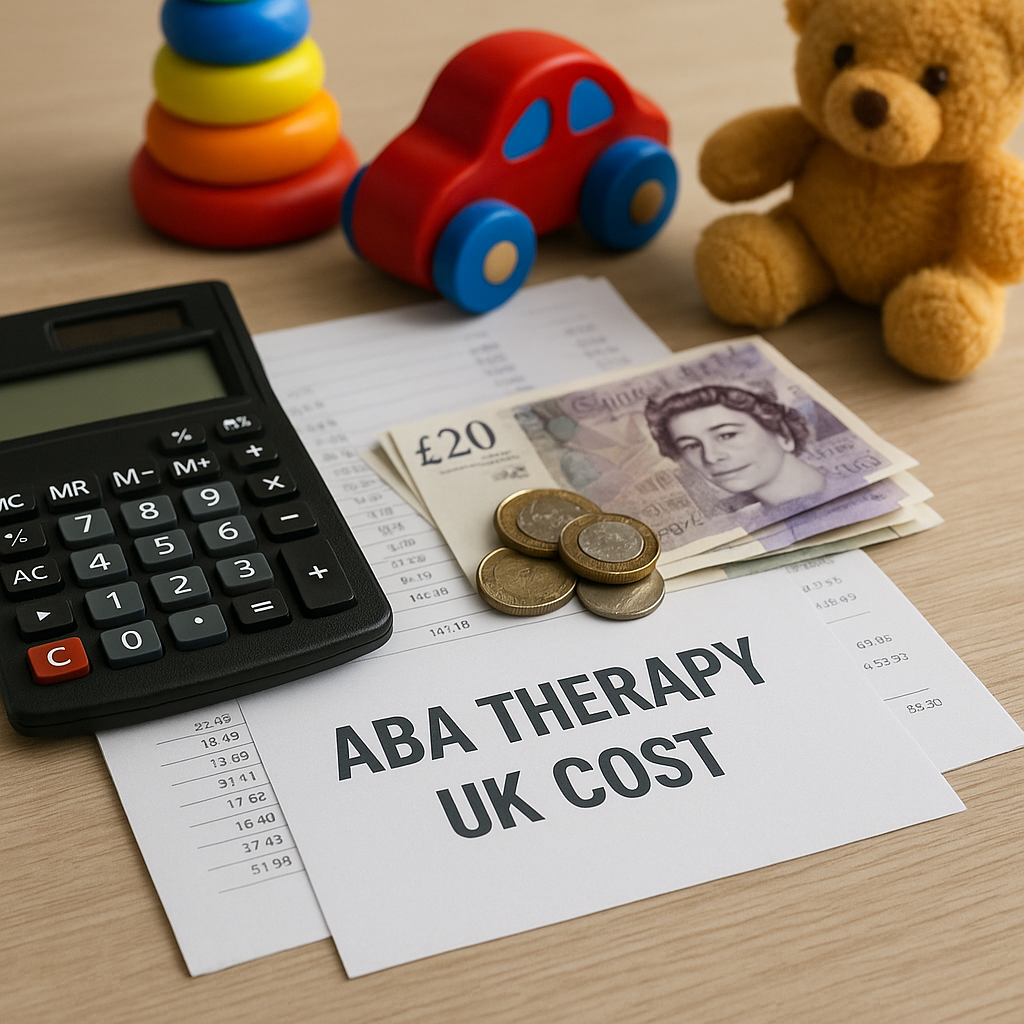
Our first shock was the cost. An ABA consultant quoted us £1,000 for a single day’s assessment. Tutors charged upwards of £50 per hour, with recommendations for 20–40 hours of therapy each week. That quickly added up to £3,000–£5,000 per month. Even when we eventually found someone charging £35 per hour, travel costs doubled the figure to nearly £70. For most families, these costs are out of reach.
The National Autistic Society acknowledges that ABA can be beneficial, but cost remains one of the biggest barriers for parents in the UK.
Lesson 2: No NHS Recognition or Referrals
The second barrier is the lack of NHS recognition. Families are rarely, if ever, referred for ABA therapy through the NHS. Instead, the focus is on speech and occupational therapy. While useful, these options fall short when a child needs a structured, evidence-based programme like ABA. Parents are left entirely responsible for finding and funding therapy.
According to NHS autism guidance, support typically includes speech and language therapy or occupational therapy — but ABA is absent from the list. This leaves families without public support for an intervention that has decades of international research behind it.
Lesson 3: Inconsistent Tutor Availability
Even when families are willing to pay, finding tutors is another challenge. There is no centralised system for ABA tutors in the UK, leaving parents dependent on word-of-mouth or online forums. Availability is patchy, and many families face long waits before securing a consistent schedule. For us, it often felt like we were chasing shadows — names would be recommended, but weeks would pass before we heard back.
Lesson 4: Unrealistic Recommendations for Therapy Hours
Once we did secure some support, we were told our child needed three to four hours of therapy every day. While this may be best practice, it was completely unmanageable financially. Parents already under stress cannot be expected to deliver 20+ hours per week privately. Without recognition for smaller, parent-led programmes, families are left feeling as though they are failing simply because they cannot afford the recommended hours.
Lesson 5: Poor NHS Alternatives Offer Little Relief
Because ABA was blocked, we pursued NHS speech therapy as an alternative. After months of waiting, what we received was deeply disappointing. The sessions were generic, the environment uninspiring, and the activities no more advanced than what we could do at home. When therapists visited nurseries, reports were weak and inconsistent. Before long, we were discharged with a vague statement: “Your child needs more than speech therapy.” This left us without answers, and without support.
The Royal College of Speech and Language Therapists has highlighted workforce shortages as a key reason services fail to deliver, but for parents, that doesn’t change the fact that children lose critical developmental time.
The Emotional Impact on Families
The combination of high costs, lack of NHS support, tutor shortages, and poor alternatives left us drained. We felt guilty, frustrated, and isolated. Watching other countries embrace ABA while the UK dismissed it was heartbreaking. Families like ours are forced to cobble together solutions, constantly worrying that their children are losing the critical early years when therapy makes the most difference.
Earlia: A Practical Alternative for Parents Facing ABA Therapy UK Struggles
This is why I created Earlia. Instead of paying thousands per month or waiting years for the NHS, families can start structured support today. Earlia offers affordable subscription pricing, therapist-designed activity plans, and daily progress tracking. While it doesn’t replace a full ABA team, it ensures parents can deliver meaningful, evidence-informed activities at home without financial collapse.
👉 If you are struggling with ABA therapy UK access, join the Earlia waitlist today and secure structured support for your child.
[Join the Waitlist →]
Key Takeaway
Our experience showed just how broken ABA therapy UK access is. From unaffordable costs and lack of NHS recognition to tutor shortages and poor alternatives, parents face obstacle after obstacle. But children cannot wait for policy change. With Earlia, families finally have a practical, affordable way to provide structured support right now.